Adaptive interiors for hybrid living - how we work, rest and play at home in 2026
— 10 March 2026
Old browser alert! We have detected you are using a pretty old browser. This website uses cool features that can't be supported by your browser.
If we let you see the website it would look all weird and broken, nobody wants that!
Update your browser!— 10 March 2026
We have seen this shift particularly pronounced here in the south-west. Post-pandemic times and increasing nationwide connectivity saw many professionals relocating from cities to coastal and rural areas, so consequently homes must balance lifestyle aspirations with practical functionality.
Adaptive interiors begin with flexible layouts. Rather than fixed-use rooms, spaces are designed to evolve throughout the day. Sliding partitions, pocket doors, and joinery systems allow rooms to expand or contract as needed. A dining area may double as a workspace; a snug can transform into a guest bedroom.
Built-in joinery plays a central role. Bespoke cabinetry can conceal desks, printers, and storage, maintaining a calm aesthetic once the workday ends. In period properties common across Devon Somerset and Cornwall, carefully integrated joinery respects architectural character while introducing modern function.
Lighting is another critical component. Layered lighting schemes — combining task, ambient, and accent lighting — help delineate zones within open-plan spaces. Natural light remains essential, particularly in coastal settings where daylight and landscape views are integral to wellbeing.
Acoustic design is increasingly important. Soft furnishings, acoustic panels, and considered material choices reduce sound transfer, ensuring that work calls do not disrupt family life. In barn conversions and open-plan rural homes, thoughtful zoning prevents echo and improves comfort.
Outdoor connectivity also defines contemporary hybrid living . Garden studios, insulated outbuildings, and covered terraces extend usable space without major expansion. These structures provide dedicated work areas while preserving separation between professional and personal life.
The big thing to remember is that flexibility does not mean compromise. The most successful adaptive interiors maintain aesthetic integrity. Natural materials, textured finishes, and cohesive colour palettes ensure that multifunctional spaces remain warm and inviting rather than utilitarian.
Hybrid living is not a temporary trend. Instead, it represents a lasting cultural shift. Designing interiors that anticipate change — rather than rigidly prescribing function — creates homes that remain relevant for years to come.
In 2026, adaptive design is about resilience: spaces that respond to lifestyle shifts while reflecting the character and beauty of our beautiful region.
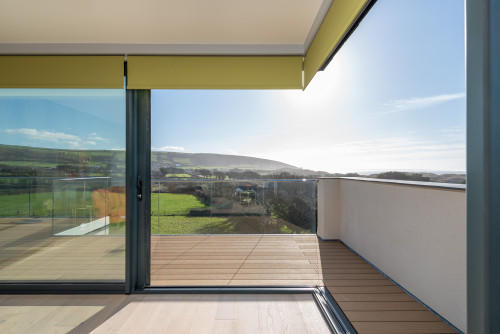
Case study : 'Serenity' luxury apartments, Croyde.
‘Serenity’ is a coastal housing scheme in Croyde that rethinks apartment living around light, outlook, and spatial generosity. Throughout the scheme, our client was keen to prioritise openness and maximise the breathtaking views wherever possible. The resulting design offered open-plan living areas that connected vertically to principal bedrooms and galleries, while feature staircases and reduced circulation space helped direct attention outward to the dunes and seascape.
As a case study in adaptive interior design, the project is especially notable for how flexibility was used to resolve an apparent conflict in the brief. The client wanted to maximise entertaining space and preserve the exceptional views, but without sacrificing a third bedroom. Rather than compromise the openness of the main living area with a permanently enclosed room, the design adopted bespoke joinery, incorporating a drop-down bed that can be used when required. This approach allowed the apartment to function as a generous, view-focused social space in everyday use, while still offering the capacity and practicality of three-bedroom accommodation. In this way, the interior strategy demonstrates how tailored joinery can enable compact homes to adapt fluidly between hospitality, leisure, and sleeping functions without diminishing spatial quality.